
Clear assignments
"Clean Your Room" Is Too Big of a Job
Kids often fail vague chores because the assignment is too large to see. A better chore has edges, a finish line, and one next step.
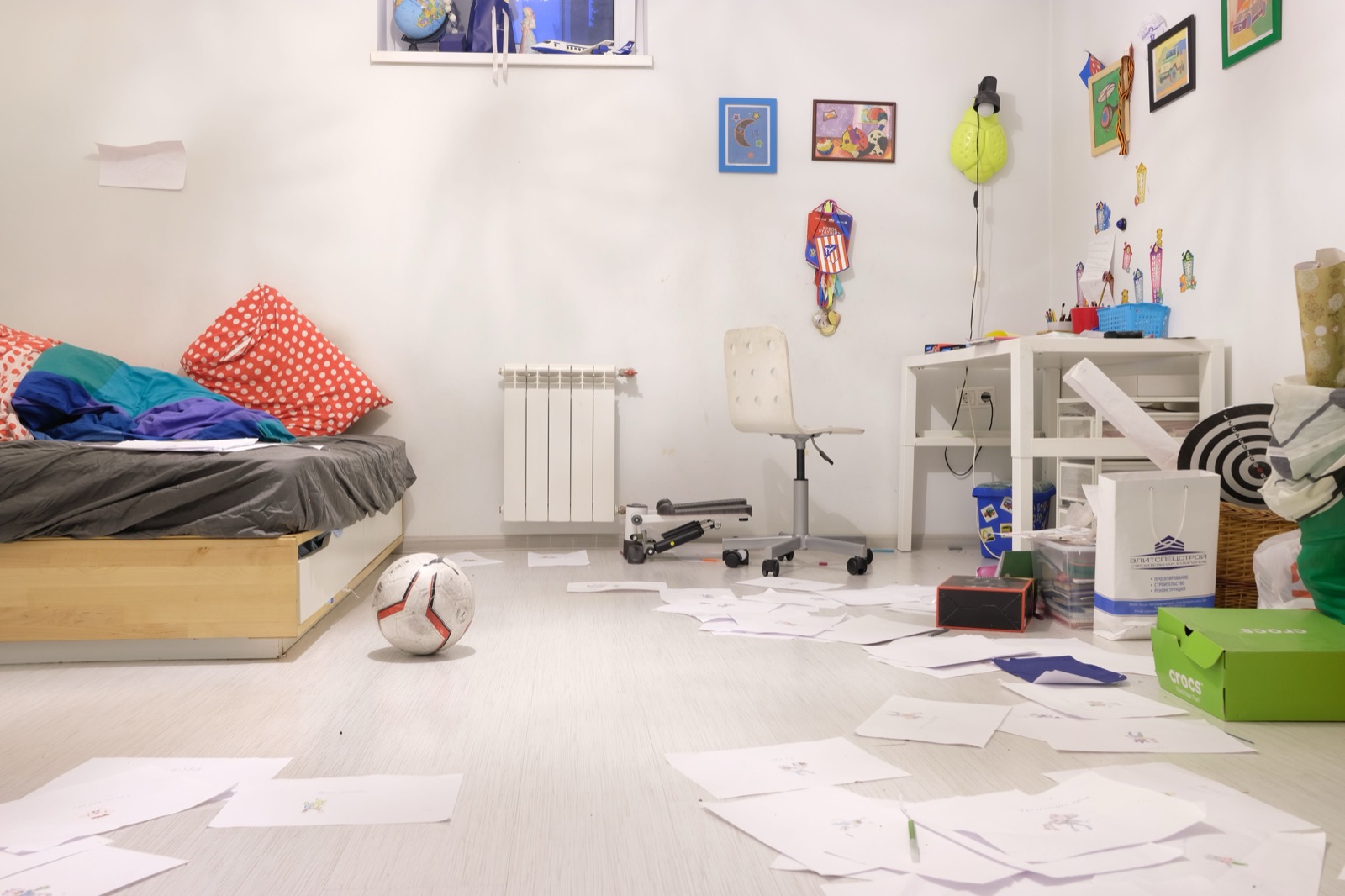
"Clean your room" feels like a normal thing to say because adults know what we mean. We can see the laundry, the cups, the paper scraps, the books, the toys, the old party favor that somehow became emotionally important, and the pile that has no category except not where that goes.
A child often hears something much less useful: make this room different in a way that satisfies an adult standard I cannot fully see. Then they disappear for twenty minutes, move three objects, and come back genuinely believing they made progress. Sometimes they did. Just not the progress you meant.
The problem is not only laziness, although avoidance is certainly available. The bigger problem is that clean your room is not one job. It is a whole collection of jobs wearing one name tag.
Clean is a standard, not an instruction
Adults use shorthand because we are tired. We say clean up because spelling out every step feels ridiculous. But the shorthand asks a kid to do a lot at once: notice the mess, sort it into categories, decide what matters, remember where things belong, keep going when the room looks worse halfway through, and judge when the job is finished.
That is project management. Some kids can do it. Some kids can do it sometimes. Some kids can do it only when the room is already almost clean, which is rarely when we are saying the phrase through clenched teeth.
A clearer assignment has edges. Put dirty clothes in the hamper has an edge. Bring dishes to the kitchen has an edge. Put books on the shelf has an edge. Clean your room has vibes.
Find the smaller jobs
A messy bedroom is usually several messes sharing one address. There is laundry mess, paper mess, toy mess, trash mess, dish mess, and the dangerous category of objects with no known home. If you name those messes, you turn one impossible chore into a series of possible ones.
- Clothes in the hamper.
- Dishes to the kitchen.
- Trash in the trash.
- Books on the shelf.
- Toys in bins.
- Clear a path from the door to the bed.
That list may still be too much for a younger child, a tired child, or a child who is already overwhelmed by the state of the room. In that case, start with one category. Just laundry. Just trash. Just the floor around the bed. A room that is thirty percent better without a fight is not failure. It is often the bridge to the next thirty percent.
Show the finish line
Kids are not born knowing your household's definition of done. One parent means the bed is made, the floor is clear, and every drawer closes. Another parent means there are no food items creating a science project. The child does not automatically know which version is operating today.
Show the standard before enforcing it. Take a quick walk through together and name what done looks like. You do not need to make it a lecture. In fact, please do not make it a lecture if you can help it. A simple, calm pass is enough: when the laundry is in the hamper and the trash is gone, this part is done.
Photos can help here, especially for kids who struggle to hold a finished picture in their head. A photo of what the bookshelf looks like when it is reset can do more than another reminder from the hallway. The point is not perfection. The point is making the invisible standard visible.
Stay nearby longer than you think you should
There is a stage where a child can do the work but cannot yet start, sequence, and finish the work alone. That stage can last longer than adults expect. It is frustrating because the child technically knows how to put laundry in a hamper. The missing skill is not the hamper. It is everything around the hamper.
Staying nearby does not have to mean doing the job for them. It can mean sitting on the floor for five minutes and saying, first socks, then shirts. It can mean setting a timer for one category. It can mean walking back after the first step instead of waiting until the whole room has gone sideways.
If that sounds like more work for the parent, it is. Teaching usually is more work before it is less work. The payoff is that the child slowly learns how to see the room the way you see it.
What to say instead
Instead of clean your room, try translating the job before you say it. Start with the thing that would make the biggest visible difference, and make the finish line obvious.
- Put every dirty clothing item in the hamper.
- Bring every cup, plate, and snack wrapper to the kitchen.
- Pick up ten pieces of trash.
- Put books on the shelf with the spines facing out.
- Clear enough floor that the door can open all the way.
It is less elegant than clean your room. It is also much harder to misunderstand. In a house with kids, that is usually the better trade.